Pages

Saturday, October 8, 2011

How to install Roll roofing

Roll roofing is the easiest roofing material to install on your own. Roll roofing is nothing but roofing sheets that are manufactured in rolls. The rolls are installed as overlapping stripes. Durability of about 5 to 10 years, makes roll roofing a popular roofing material. Roll roofing sheets are available in a wide range of materials, but the mostly used ones are made of asphalt, coated with felt or fiberglass. Basically the combination of its contents depend upon the requirements of its user. Changes are made in the composites of the roll roofing sheets, to enhance some unique qualities such as adhesion, slip resistance, water absorption, tear resistance and remarkable flexibility.

Roll roofing sheets are mostly used on the slightly sloping roofs of garages, additional porches or as a shed. If you want to finish the home construction on your own, then roll roofing is the best option for the conventional roofing shingles that you have.The most important thing to consider, is the climate on the day of the roll roofing installation. It must be sunny and not quite cold because the coldness will make the roofing unannealed and stiff. The roll sheet must be exposed to the sun for a whole of 24 hours before the actual installation process. This becomes necessary in order to make the rolls flat.

Roll Roofing
There are two installation methods, namely the hot asphalt method and the cold asphalt method. Where the hot asphalt method is a bit conventional, the cold asphalt method is the really popular one. In the cold asphalt method, the spreadable adhesive is smoothed on the roof top initially and then the roll roofing is installed over it. Roll roofing can be installed using a simple adhesive and even without using any nails. Before installation, make sure that the roof top is totally clean and dried up.

We haven't gotten around to discussing the kind of roofing that one must select. The type of roofing depends on the individual person's requirements. To aid in your choice, I provide you with information on the various roll roofing types available in the market


Types of Roll Roofing

- Eaves flashing roofing - This is a polymer modified bituminous roofing roll, that works as a self adhesive. It is specially designed for pooling water or as a ice developing area.

- Smooth surface roll roofing - This roofing consists of ground talc or mica, designed as a flashing for the extrusions and overlapping of the seals. It is specifically used for the roof's overhanging, valleys and also as an extra sealant on almost every kind of roof.

- Mineral surfaced roll roofing - The surface of this roofing consists of mineral granules and small rocks. It is most commonly used for small structures like storage buildings, barns and extensive sheds.

- Saturated felt roofing - This an organic based asphalt roll roofing, underlaid between the roofing material and the roof deck.

Monday, October 3, 2011

Description And Usage Of Coating And Roll Form Machine

A good coating machine should have good qualities and conformal coating is an essential a part of an authentic machine and for this purpose there are many sorts of conformal coating equipments that are being used now a days Here's a brief introduction or detail of these elements and their functions to safe your coating machine while coating. Silicone conformal coatings are accessible in solvent resistant and solvent dismissible types as well. Their functionality could be improved at advanced temperatures.

Polyurethanes are one or two part systems but single part system is better than the 2 part system. They've shown good results they usually can not remove easily if utilized once. UV coatings are non flammable which affords advanced chemical and warmth opposition. Many properly established companies offer good quality coating machines on very acceptable cost and from Internet info can be collected before buying such machines.

The invention of metal has been essentially the most conclusive change in the entire human past. Metal importance could be judged that it is being used every where in the routine life for example in land automobiles, kitchen accessories and various other house hold objects and almost in every industry all through the world.. Metal forming is also getting popularity day by day. There are different sorts of metal forming and out of those varieties Roll Forming is a very utile, helpful and multi purpose method.

Roll Forming Machine
Roll forming is a communal and utile method for composing things from sheet metal and it contains an interesting process .Some peculiar sort of machine is used for roll form metal. There are numerous rolls in roll form machines which are adjusted side by side or one following the other that are separated into different sets that are also known as 'stands'. These stands don't bring huge changes into the metal.

Roll form machines crook the metal into preset shapes. There are some requirements mean each and every shape require its personal and alone set of rollers. It's obvious from this point that one roll form machine can form or prepared one shape only. This type of roll forming machines is made for industrial or trade use.

There's another roll forming machine which definitely has automatic process with out breaking metal and takes less time. Though it has many advantages but its rates are also very high. These machines contains different qualities and steel roofs, steel, walls, studs, all of them are the production of roll form machines. Many federations supply roll form solutions to the building enterprises and fulfill the fundamental requirements of the market.

After the great invention of new forming procedures there are numerous companies which are offering services for roll- forming and they have quite experienced staff that design and produce new ways of applications that are taking place of old and previous manufacture. The designers also keep in minds the value of new product along with its affordable cost. In the roll forming process and manufacturing, lots of time is consumed for in its final or finishing steps.


Monday, September 19, 2011

Sheet Metal Forming Tools

Sheet metal forming used to be done by hand. That was previously the job of strong, skilled, handy blacksmiths who relied on a hammer and a hot oven to get metal to a desired format. Nowadays there are various sheet metal forming tools that are used to achieve the perfect shape for the metal pieces that are used in many types of building applications.


Wheeling Machines


Wheeling Machines
The Wheeling Machine, also called an English Wheel, is a popular type of metal forming tool that is used to create double curves in metal. The user puts a flat metal sheet (usually aluminum or mild steel) through this C-shaped machine to get even curves. These machines are usually used for the curving elements of cars, boats, and other complicated machinery. The Wheeling Machine stretches and thins the metal before forming it into the desired shape. These metal forming tools are for serious industrial projects, and the estimated cost for a Wheeling Machine is anywhere between $3,000 to $5,000.

Air Power Hammers

Air Power Hammers
An air power hammer is a tool that has replaced the need to use a handheld hammer for blacksmithing projects. This metal forming tool uses a powerful force to bend even the toughest metals into desired shapes. This tool shapes and planishes metal. Shaping is done by modifying the condition of the metal (such as stretching it out first) and then turning it into another form. When something is "planished" it is being reshaped from light hammer force. You can find an Air Power Hammer for between $2,000 to $5,000.

Shrinker Stretcher

Shrinker Stretcher
Another metal forming tool is the Shrinker Stretcher tool. These machines are built to stretch or shrink various types of metal, usually mild steel. A special adapter, called a "jaw" is required fo this type of machine. The Shrinker Stretcher is air-powered and easily switched from a shrinking setting to a stretching setting with a simple change of the jaw. Shrinker Stretchers go for up to $10,000 (possibly more depending on the manufacturer).

Bead Forming Machines

Bead Forming Machines
Uniform beads are small circular pieces of metal that have been smoothed around the edges. Metal beads could be used for jewelry or as components in major machinery; think of an assembly line that requires constant movement on wheels. The beads are formed when the two interlocking pieces slide against each other continuously. Depending on where you find them, you will probably pay a few hundred dollars for these metal forming tools.

Why Do We Need Metal Forming Tools?
Metal forming tools are important for any project that involves metal. You certainly can't bend or form a heavy duty steel plate to tight requirements by hand; you need a machine that is powered by more than just elbow grease. Common businesses that need metal shaping tools include car production plants, airplane manufacturers, and small businesses that deal in iron works and metal fencing

Monday, September 12, 2011

Function Of Roll Forming Machine And Roll Forming Machine Firm

Time is passing swiftly and man is getting progress in almost all fields of life. Now the present shape of this earth is totally completely different from the earliest time world. History is full of discoveries by man and man is introducing many inventions and certainly one of his discoveries is metal through which world is being modified day by day.

Roll forming is a superb procedure through which totally different object are made and for making these totally different objects roll forming machines are required which are available in the market. Many rolls are set at a time in a machine step by step into the stands. As it has mentioned that rolls are set on the stands and the basic functions of these stands are to bend the metal lightly. So that metal could be passed from various other stands to get required shape. Roll forming through roll forming machines is fantastic for manufacturing parts however it is long to some extent.

Roll Forming Machine
Function of a roll forming machine is to bend the metal into already decided forms. Shape will likely be exactly by which form sheet was cut in the beginning and it is extremely simple and easy procedure. To give a different shape, separate rollers set are necessary and with out rollers, process will be incomplete.

Although it seems now that it is not useful machine but no matter, keep few things in your mind that these type of machines are produced only for industrial objective and there are lots of factories or industries which have to produce or manufacture same thing again and again in bulk and one of its main example is cars or land vehicles company etc.


Roll Forming - Siding
Therefore, there is no need to change or alter if machine has been installed once. However, rollers are arranged with great care to form required shapes and many industries are following this procedure to customize the rollers earlier than getting the machines installed. Many roll forming machine companies meet the demands and brings fruitful results to the owners. It is considered a necessary a part of equipments therefore its costs a much or in other words these are very costly. Through the use of or installing these machines time could be saved and lives become very easy because it give relief from different complications. This is very useful for those business persons who are not willing to invest much more in the beginnings and this machine could be very easy to handle.

If you want to purchase a roll form machine then you can talk to the supplier or some well known, established roll forming Machine Firm and you can get the required machine after bargaining or getting great discount or you can also pay full amount at once as well.

No doubt roll forming is a new and modern procedure for the manufacturing of excellent metallic manufactures. Aluminum sheets and steel sheets are used normally for this all process and it is very cheap or affordable any many roll forming machine corporations are getting more profit and producing a large number of products through the use of upper mentioned material. Roll forming machinecorporations keep many experienced employees for the better designing of their products.

Thursday, September 8, 2011

Roll Forming For Roofing Components

Roll forming of roofing components for the pre-engineered building and component industries presents unique challenges for manufacturers. Tighter profile tolerances, wider product ranges, and compressed lead times present production challenges for producers running older equipment or those contemplating a move into this market. Some developments in equipment and processes that are important to producing secondary structural members include quick-change roll form tooling systems and tooling that can improve the productivity of roofing components- Cee's, Zee's, Eave Struts, Channel, and Base Angle.

Roll forming roofing components for the pre-engineered building and component industries presents unique challenges for fabricators. Tighter profile tolerances, wider product ranges, and compressed lead-times are production challenges for producers running older equipment or those contemplating a move into this market.

Coil Handling
Coil Handling:
The first step in improving roll formed roof framing components starts is coil handling equipment. Keeping the production line fed always has been a process that has a major impact on line productivity, and it is even more important today with the introduction of high-speed punching systems and quick-change roll formers. Reduced lead-times and just-in-time (JIT) manufacturing philosophies have increased the number of daily coil changes, in some cases by tenfold.

Running a complete coil is no longer the norm. Many producers are running a few parts and then switching to another coil, because they are increasingly producing complete buildings to order rather than rolling components to stock.

Many types of coil handling systems are available to help manage the process and improve productivity in this area. Coil storage racks, rotating turnstiles, and coil cars help production personnel stage coils into and away from the production areas. Coil management software is available to help streamline the flow of orders into manageable units that help the operator balance flexibility and productivity; knowing which coil is going to be run next (and the available length of that coil) is just as important as changing coils quickly.

Double-arm uncoilers with powered hold-down rolls allow the operator to prepare the new coil for production while the line is running and secure the partially used coil for offline rebanding, increasing line uptime. Automatic and semiautomatic feed-up systems with band breakers and nose benders reduce the time required to get a new coil into production.


Roll Forming Machine
Roll Forming:
Today's roofing component producers need the ability to change from C to Z to single- or double-slope-eave struts, in a variety of sizes and gauges, all within the confines of a single order.

Some new purlin production systems on the market today offer this flexibility with both automatic and semiautomatic changeover. Eave struts can be produced inline in either single- or double-slope configurations, eliminating an offline bending operation. Positive gauge changes can be manual or automatic, or in some cases accommodated with floating tooling.

Eave struts can be produced inline in either single- or double-slope configurations, eliminating an offline bending operation. Positive gauge changes can be manual or automatic, or in some cases accommodated with floating tooling.

Material Handling:
It may sound basic, but a high-speed purlin production system requires a high-speed material handling system, and a system capable of producing a range of parts requires a material handling system that can handle the full product range.

Controls:
Keeping pace with the change in forming technology, line controls have evolved as well. Machine controls are available with open-architecture operating systems, enabling direct communication with a variety of production control systems. Many of these systems use off-the-shelf components for local serviceability.

Monday, September 5, 2011

The Use Of Roll Form Machines

Roll forming machines, also known as roll form machines, bend metal into preset shapes. They bend a long strip of steel that is coiled in a specific way by passing a strip metal through consecutive rolls. Every roll performs an incremental role of bending until the desired design is obtained. This technology is being used in office furniture, automotive, material handling and industrial and trade use.

This machine can produce many cross section profiles although it requires a crafted set of roll tools for that. The rolls are designed with a pattern similar to that of a flower. Simulation is used in these machines to lessen the number of stands and materials. Materials designed by such machines are light and strong. They do not need to go undergo the processes of finishing or paint.

Roll Forming Machine
The material obtained from roll forming machines is very economical. They are the primary choice of companies for reduction of cost in manufacturing and also time. It can provide the furnished shapes of exact length. It reduces the manufacturing space and minimizes scrap loss. Also, labour cost is greatly lowered.

These kinds of machines can process in number of methods including flat rolling, ring rolling, foil rolling, controlled rolling and roll bending. These machines are also used to minimize the usage of a new set of roll for producing similar materials like track profiles and stud.

Use of Roll Forming Machine
The suppliers of these machines try to create a long-term business relationship with their buyers. They may give technical support for these machines projects and designs for these projects. There are many new kinds of machines that have new and beautiful designs. They are functional, efficient and give out less noise. They provide these machines at very reasonable rates.


After the great invention of new forming procedures there are many corporations that are offering services for roll forming and they have quite experienced staff that design and produce new ways of applications which are replacing older products. The designers keep in mind the value of new products together with its reasonable cost.

Roll forming machine suppliers also provide all sorts of roll forming solutions for automotive, building and construction. Their engineering teams develop beautiful,unique and leading designs of international standards.

Thursday, September 1, 2011

Roll Forming

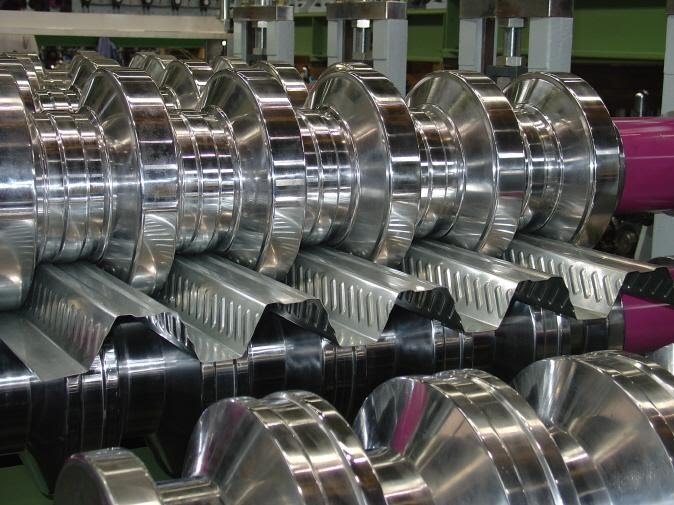
Roll forming is a high-speed, high volume production process, which uses a roll forming machine to convert metal sheets or coils into parts as the metal moves through the machine. As the material passes through the machine, rolls situated on both the top and bottom of the machine apply pressure to bend the material thus forming various configurations. Roll forming is a metal roll forming process that is suitable in the fabrication of stainless steel, copper, aluminum and steel products.

Manufacturers use roll forming to create standard parts that include angles, rings, channels and other forms. Some manufacturers can also provide custom roll forming. Many industries rely on roll forming services to fabricate products, which can be utilized in rail cars, door frames and helicopter blades. The advantages of using roll forming services to create these parts are quick and efficient accommodation of high volume orders, diverse range of shapes created with this process and greater uniformity/ consistency of parts.

Roll Forming
Some options to review when considering the use of roll forming are:

1. Find roll forming services that provide a wide range of products.

2. Locate manufacturers that offer custom roll forming.

Get roll formed products for many applications
Many industries use roll formed products in diverse applications like helicopter blades, conveyor systems and ramps. When looking for providers of roll formed parts or products, choose those companies that serve many industries, offer a wide array of products, provide secondary operations and that can meet your application needs.

Choose the right manufacturer for your custom roll forming needs
Whether you have a unique application that require precision roll formed shapes, channels or angles or you need a part specially designed for your business, you need companies that have the expertise to handle complex design applications and can deliver quality service.

Select roll forming machinery and equipment for your company
Big or small businesses require machinery and equipment that is cost- effective and with features that can reduce set-up and downtime. You need companies that can provide different types of machines, understand the needs of its customers and can customize equipment to meet a customer's overall requirements.


Saturday, August 27, 2011

Demand Of Roll Forming Machine

Roll forming machines bend the long strip of metal specifically coiled steel by passing a strip metal from consecutive rolls. Every roll performs an incremental part of bend till the required design is obtained. The technology of these machines is being used in office furniture, automotive, material handling, automotive and industries of building products.

This machine can produce a variety of cross section profiles but it requires a crafted set of roll tools. All of the rolls are design with a flower pattern. To minimize the number of stands and material, simulation is used in these machines. These machines have benefit over extrusions of the similar shapes. Materials designed by this machine is mostly lighter and stronger. These part need not to go through the method of further finishing or paint.

Demand of Roll Forming Machine
Roll forming machine permit steady observance to bearable acceptance to produce completely different shapes and dimensions based on the requirement. It increases the speed of manufacturing by eliminating the other operations like notching and scratching. Materials obtained by roll form machine have more strength as in comparison with the other processes. It can produce hollow or semi hollow shapes with the thinner walls.

Materials obtained by roll forming machine is economical and all the time be the first choice of firms for reducing cost of the production and time. This machine can provide the furnished shapes of exact length. It reduces the manufacturing space in the plant and minimizes the scrap loss. Labour cost is significantly lowered by eliminating the other operations. Roll forming machines can be used where the roll formers do so as they need continuous adherence to close tolerance. These kind of machines can process in number of ways including flat rolling, ring rolling, foil rolling, controlled rolling and roll bending. These machines are also used to minimize using a new set of profile roll for producing similar materials like track profiles and stud.

Roll forming machine provider provides the roll forming machines, aluminium and steel corrugated roofing sheet forming machines. They like to introduce themselves as a leading exporter of these machines.


Roll Forming Machine
The roll forming machine suppliers also have the hopes to create long term business relationship with their purchasers for mutual benefits. They can provide technical assist for these machines, projects and for designing the completely different projects or drawings of the projects. They have many varieties of roll kind machines in new and beautiful designs that are of creative performance, easy to operate, high efficiency and low noise. They provide these machines on affordable prices.

Their machines consist of de coiler, coil sheet, and roll forming system, guiding equipment, post cutting equipment, controlling system and hydraulic station. Merchandise manufactured by these machines like colored steel tiles are elegant, beautiful and noble, that are extensively used in exhibition centre, hotel, garden, civil construction, villas and lots of other places.

Wednesday, August 24, 2011

roll forming machine technology application

The current level of development of Roll Forming technology is concerned, in the country mainly to new products (including product upgrading) the development of design verification and simulation on a sample of the trial, from product concept to complete design (or redesign) - design - structural design - basic functional assessment - this trial simulation prototype development process. Structure based on certain products of plastic can also be small quantities trial, or some physical aspects of functional testing, assembly verification, look at the actual appearance, and even low-volume assembly of the product to market first, to achieve the purpose of testing the waters.

Roll Forming Machine
Application of roll forming machine in the following areas:
(1) new product development process, design verification and functional verification. Roll Forming technology can quickly design of the CAD model into a physical mock-ups, so that designers can easily verify the design idea and product structure is reasonable, can be assembled, aesthetics, design issues can be found to be revised. If using traditional methods, need to complete the mapping, process design, tooling manufacturing, and other aspects of a long cycle, high cost. If you do not carry out design verification and direct production, then once a design error, it will cause great losses.

(2) manufacturability, testing and delivery for assembly inquiry, marketing, on the limited space of the complex system, such as automobiles, satellites, missile-manufacturing and assembly of the use of Roll Forming methods can be tested and design, greatly reduce the difficulty of the design and manufacture of such systems. Difficult to determine for complex parts can be used to Roll Forming, trial production technology in order to determine the optimal and rational process. In addition, Roll Forming prototype or product from design to commercialization of every aspect of an effective means to communicate. Provide customers with products such as the sample, market promotion, etc., rapid prototyping and concurrent engineering has become a technical way of agile manufacturing.
(
3) single pieces, small batch and special direct production of complex parts. Components for the polymer materials, high-strength engineering plastics can be used directly to rapid prototyping, to meet the requirements; for complex metal parts, casting or by direct metal rapid prototyping available. The application of aviation, aerospace and defense industry has special significance.
(4) rapid tooling. Roll Forming technology through a variety of conversion into a variety of rapid tooling prototypes, such as low melting point alloy mold, silicone mold, cold spray metal mold, ceramic molds, for the production of small quantities of parts to meet the product replacement fast, increasing quantities small trends. The field of rapid prototyping applications, including the manufacture of almost all industries, in health care, human engineering, heritage and other industries have also been more widely used.

Wednesday, July 20, 2011

Custom Roll Forming Techniques

The professional roll forming manufacturer who has established himself in this specialist field will always ensure expert advice to customers and deliver well designed products or maintenance services. Such an organization guarantees the most sophisticated tooling system staffed by highly experienced and skilled manpower. Thus most solutions can be found for your new or running installations with minimum of complexity in operations. The advent of superior roll formed profiles has given rise to newer designs and effective performance in comparison with the earlier extruded sections that were rather difficult and more expensive to produce. The main feature of the new technique is maintenance of very close tolerances and better finish of the profile sections that have a better fitting with each other and the environment where they are applied. The roll forming process also gives superior designed products compared to the stamping technique commonly used in the earlier days. Consequently, the roll formed profiles find applications in the electrical installations, cables, furniture and fixtures or fittings, various appliances and automobile or transportation sector, etc. A great deal of information is available at the websites of different roll forming manufacturers.

Roll Forming Machine
In this trade it is common practice to cater to the customized requirements of customers and specific industries. Here the close tolerances that need to be maintained could be a taxing task but the professional companies are fully geared to ensure the highest quality control that will assure the stringent specifications to be met at all times. The equipment for roll forming is rather intricate though convenient to operate. The process therefore can be run at high manufacturing speeds to churn out a great number of parts per hour. There is no compromise in quality and the entire manufacturing line is so operated that the rejections due to quality control are quite minimum. Buffer systems online help in making the downtimes rare between changeovers and the process can truly be termed as a 24/7 schedule manufacture! The most experienced custom rollforming manufacturer can always cater to the client's strict specifications and requirements thereby guaranteeing the best product and accompanying service after sales in the business. The process expertise and customer service professionalism shown by most manufacturers and their sales organizations will undoubtedly keep the customers happy and contented at all times.

Monday, July 18, 2011

Roll Forming Machine

Roll forming machine was applied in large quantities Metal Roll forming is a continuous process.Roll forming is a continuous metal forming process that transforms sheet, strip or coiled metal into shapes with a consistent cross section. The stock is fed through successive pairs of rolls, which progressively shape the metal until the desired cross section is produced. Only progressive roll forming (bending) takes place; the metal thickness is not changed except for a slight thinning at the bend radii. the number of the roll former was different depending on the specification of the product. typical the number can be 8 to 30.the more the roll forming steps. the pressure divided into each one was small, duo to the efficien consideration, there is a balance point we should follow. that is way experience is important in roll forming machine products.

Every active roll forming machine in our plant has been designed, built and maintained by Cardinal Manufacturing employees to stringent specifications.

Roll Forming Machine
This dedicated approach to machine building yields great benefits in both quality and service. Our constant demand for improvement allows us to continually upgrade our machinery whenever innovative technology is introduced.


Furthermore, since every machine is built solely for our use, any breakdown can be quickly repaired without reliance on outside agencies. This self-reliance allows Cardinal Manufacturing to maintain an uninterrupted flow of service to all of our customers.

Thursday, July 14, 2011

What you need to know about roll forming

Many companies that form a variety of shapes and have a choice of machines that can be used often switch the rolls from one machine to another. The operator usually has no input in choosing the machine, because its selection is treated as a production/scheduling problem. However, the person who does the scheduling does not know that forming rolls are designed for a machine with a specific horizontal center distance, and running them at any other distance will affect how well they work. This basic principle explains why operators are heard to say: "This set of rolls works on Machine A, but we have problems when running it on Machine B." The term "horizontal center distance" is the most misunderstood phrase in roll forming. It refers to distance from the centerline of one forming station to the next

Roll Forming Machine
Does changing the rolls to a machine with a different horizontal center distance mean they will not work? Not necessarily. However, if the horizontal distance is shortened, it is possible that one or more portions of the metal strip will be stretched going from one forming station to another and be permanently wrinkled. The term for this case is "forming too fast."

If the horizontal distance is increased, there is a chance that the profile will spring open between some passes. Wherever a profile opens, the next station must close it back to its original position in addition to doing its share of the forming. It usually is not possible to close the profile to its original position because of localized work hardening of the metal. This phenomenon is called "losing control of the section."

Each metal has a different set of formability characteristics, which includes springback. A set of roll tooling that is designed for a low carbon steel might not work on one of the stainless steels or any metal that has more springback. As a guideline, the only way to determine how much lengthening or shortening the horizontal machine center will affect the performance of a set of forming rolls is to try the rolls at different horizontal distances using the metal in question.


The trend in rollforming is to reduce the thickness of the metal in the part, and maybe change the metal. As a result, the formability of the metal changes. The Purchasing Department orders the new raw stock, and the Sales Department notifies their customers of the availability of an improved product. The Production Department receives notification, so it can plan for a change in volumes for its products.

The operators, however, are not told of the change to the product. Thinner material, with different formability, is brought to the roll forming line, and the operator is expected to produce parts at least as good as the ones they have been making. None of the people involved in making the change is aware that a change in metal thickness affects the performance of the roll tooling.

Tuesday, July 12, 2011

What you need to know about roll forming

Roll forming is a metal bending operation. This is the fundamental principle of the roll forming process. A common mistake that is made when running a rollforming machine is to roughly adjust the first forming passes to get an approximate shape, and then use the last several stations to force the metal into the final shape. An approach like this combines coining, stretching and extruding, and results in a part that is full of internal stresses. If the metal is thin, the part becomes "alive." A test to check if a light gauge profile was formed too fast in the last several rollforming stations is to hold a long piece of the profile by one end and slowly rotate it. If it is alive, it can suddenly snap into a twist along its length.

Roll Forming Machine
Internal stresses within a live section are not consistent, causing problems in secondary operations, like curving or bending. Two pieces that are roll formed by different operators using the same set of tools can look the same, but behave differently. One person adjusted all the forming passes so each pair of rolls did its share of the work, while the other used the last passes to crunch the metal into shape.


Although a rare exception, sometimes the operator cannot obtain a good cross-section without excessive pressure in the last driven passes because of a poor roll design. In other words, the rolls are not capable of forming the product. An experienced operator can determine the capability of a set of roll tooling by setting the roll gaps to do pure bending, and closing them slightly to compensate for the springing apart of the roll spindles under load. The set of tools will have a different capability for each material and material thickness combination that is processed. If the correct shape must be forced into the profile at the end of the forming machine, then part consistency will be difficult to maintain, and will show up in statistical checks or secondary operations.

Thursday, July 7, 2011

Application of roll forming machine

Our c purlin roll forming machine z purlin roll forming machine and quick interchangeable z c purlin roll forming machine Can be used to produce Light Weight Portal Framed Buildings. The roll forming machines have the added advantage of being able to produce any office accommodation that may be required and integrating it into the structure of the building. The portal frame designing offers a whole angle building solution that is ideal for small to medium sized buildings

1. Portal frame design is drawn as per vertex example.

Roll Forming Machine
2. The Intermediate joists and purlins are also designed using the framing removing the need to outsource components.

3. The components are then formed by the roll forming machine. And can be
delivered to site as completed frames, semi assembled components or flat packed for on site assembly. (flat pack is perfect for sites where access is limited.)

4. Once the frames are assembled the portals and end walls are stood and connected with the joining lattice frames. Giving the main structure of the building.

Benefits of the Howick System.
- Swaged to fit studs with location dimples and recessed screw holes giving flush walls with no steps of protruding screw heads.

- Components finished ready to assemble.

- No cutting or waste on site.

- Lipped top and bottom track add rigidity to the frame.

- Door and window opening are accurately sized.

- Panels can be made on a Just In Time basis.

- Reduced On Site labour and skill requirements.

- Holes can be pre punched in position for services removing the need to manually


create the holes on site.
- Light weight frames reduce foundation requirements.

- Entire Building constructed from a single section.

- Frames are galvanised requiring no further treatments.

5. The wall panels are then positioned adding strength to the structure.

6. The roof panels are then secured to complete the structure ready for cladding and finishing.

7. Office space can easily be constructed as stand alone or structurally attached using the same framing. Allowing the entire unit to be produced with a single roll forming Machine.

Tuesday, July 5, 2011

How to become a successful roll forming manufacturer?

Industries related to heavy metal perform roll forming, because these metals need to be shaped in different shapes and sizes, pierced and drilled for particular purposes and are cut in accurate measures for industrial needs.Genrally roll forming is required for heavy gauge companies but it can be required in small scale industries too.

A manufacturer of roll forming is not easy sometimes, when some of the same shape to be produced in heavy industry to measure and then completed by a roll forming operation is to strengthen the metal. It strengthens the metal and make them stronger. Metal has to be reformed from the original as it can not be used directly for production. So, for the process of reform and shape them to the fold, and even the brake pump. So how better to gain success in the business of forming rolls is to perform these actions with care to preserve its reputation in the industry.

How to become a successful roll forming manufacturer
The length of the heavy gauge metals is too much and they need to be handled carefully for making then uniform and consistent. Some time the manufacturing process of roll forming desires closer and narrow tolerances to be handled in varied ways. So the industries which perform roll forming should be able to handle these kinds of dense or closer tolerances. Roll forming related industries perform high volume and even fast speed actions, the surface ready should be properly finished and of superior quality. No doubt, it wholly depends on their craftsman ship and their team member’s skillfulness and the management of Roll forming manufacturer.


As modern era is the era of cutthroat competitions, so industries engrossed in the roll forming process needs to be competitive in the terms of prices. There are variety of industries which offer competitive prices and better quality services. One needs to be very particular about providing on time and proper services, so that they may get success in the terms of satisfied customers. Word of mouth is a great way to get success in any business and that is true with the metallic roll farm business too.

Overall, good terms are the back bone of each and every business. If the companies work ethically, provide better services then only they can be successful in any of the business. Metallic Roll form business has a bright future ahead, so if you are competitive enough then success is certain.

Friday, July 1, 2011

Roll forming machine application

Roll forming machine was applied in large quantities of parts with constant complex cross-sectional shapes. Parts often are of long length. As with extrusions, however, short parts can be made by cutting the formed strip to certain length.

Sheet thickness can be 0.13 mm to 25 mm was processed. However, except for heavy-wall welded steel pipe and structural members made by this process, normal commercial limits are 0.25 to 4 mm Processible widths range from 25 mm to 21/2 m (1 to 100 in). however, 1 m(40 in) is a common commercial maximum, and 400 mm (16 in) is the thinest processible on the most commonly available roll forming machines. Deep forms are difficult; 100 mm (4 in)is a practical depth limit for easily made cross-sectional shapes.

Roll Forming Machine Process


Roll forming Machine components have many applications, especially when mass production is involved. In the building industry, components manufactured by this process include roof and siding panels, purlins, joists and studs, window frames, door-trim ridge rolls, downspouts, architectural trim, and copper electrical conductors.

Appliance parts made by roll forming include panels for stoves, refrigerators, and other appliances, particularly when wraparound forms are involved, refrigerator shelves, and lighting-fixture parts. Curtain rods and tracks for sliding doors and draperies, drawer handles, and metal picture-frame members are also made by roll forming. When curling (longitudinal-bending) equipment is included in the roll forming line, such parts as bicycle fenders and wheels, quonset-hut frames and roofing, barrel hoops, drum rings, and bezels are formed.

Roll forming can be carried out with planted, galvanized, lithographed, vinyl-coated, and painted stock (if the paint is baked and the roll forming is not too severe or if a bendable-paint formulation is used ). Dual-layered components also can be made at one time. These may include bimetallic parts such as those made when a thin stain-less-steel facing sheet and a carbon steel support sheet are roll forming together or when fiber, paper, asbestos, or rubber inserts are places in a metallic form.

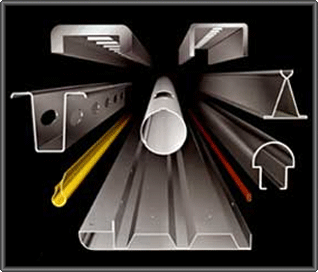
Long pieces such as railroad-car and truck-trailer trim members can be made with this roll forming process. The maximum length of parts is dictated only by application requirements and handling conditions. Figure illustrates some typical cross sections that can be produced by this roll forming process.

Wednesday, June 29, 2011

Why roll forming

roll forming, is a process of continuous bending in which a long strip of metal like coiled steel is put through consecutive sets of rolls, or stands, each of them are bending a part of the metal, until the required cross-section shape is obtained. Roll forming is good for producing parts which are long in lengths or needed in large quantities. The process of roll forming is one of the most simplest manufacturing processes for the roll forming manufacturers. It generally begins with a large spool of metal strips, which are generally between 1 inch to 20 inch in width, and about 0.0004 to 0.125 inch in thickness. These sheets are held together by a device known as 'dispenser'. After this process, the metal sheet is unrolled and put in to the machine which has stock feeder in the beginning and is connected to a cut off attachment. After the sheet is passed through the cut off attachment, it is then fed into the forming rolls. These mating die-set rolls do the job of constructing to form the desired shapes, and this is done in sequential stages by various shaped rolls.

Roll Forming Machine
The layout of these rolls can be in any different roll configuration like flower shaped or progressive upper and lower rolls, or the side rolls, or even overhung spindle rolls which are also known as cluster roll configurations. Steel is also a very important material used for framing and cladding roofs and walls. Houses which are made of steel are easily erectable and can be insulated. They are earthquake resistant, cost effective too. Due to roll forming, the architects and designers can now give wings to their imagination .it is also very convenient for the manufacturer because it requires less labor.


There are several different kinds of roll forming machines, which can be purchased and also be developed to fit the specifications of cross-section. The name of some of the roll forming machineries are rollforming presses, Purlinmaster Rollformers, Stud and Track Rollformers, Workhorse Series Roll formers and Greenfield Stud Rollforming Lines. These Rollforming machineries are used in a number of industries like in the building construction industry, for garage doors, for automotive, shelving and other complex parts.

The future of the building industry can be improved if there are advances in the processes of roll form. Modern roll form system is a integrated fully computerized system for handling, processing, and finishing the material with better efficiency and economically. Due to this technical and spatial advances in the field of roll forming, the future of this industry looks brighter.

Wednesday, June 8, 2011

Roll Forming Machine Lines

How to Buy the Right Type of Roll Forming Lines
When your company is seeking to purchase a roll forming production line, there are two very distinct types of roll forming equipment in the market today. There is the type which is designed for lightweight, mobile use at the work site (refer to as “WORK SITE” equipment) and the type which is in-house, heavy duty, bolted-to-a-concrete-floor, non-portable (refer to as “IN-PLANT” equipment).

Since both types of roll forming production line have their place in the market — do you know which one is right for your company?


1. Determine the annual lineal footage of product you require.

2. Know what your Maximum Product Length needs to be.

3. Investigate Line Speed.

4. Find out Coil Size and Cost.

Tuesday, May 31, 2011

Guide to Roll Forming

Roll forming is a high-speed, high volume production process, which uses a roll forming machine to convert metal sheets or coils into parts as the metal moves through the machine. As the material passes through the machine, rolls situated on both the top and bottom of the machine apply pressure to bend the material thus forming various configurations. Roll forming is a metal roll forming process that is suitable in the fabrication of stainless steel, copper, aluminum and steel products.

Manufacturers use roll forming to create standard parts that include angles, rings, channels and other forms. Some manufacturers can also provide custom roll forming. Many industries rely on roll forming services to fabricate products, which can be utilized in rail cars, door frames and helicopter blades. The advantages of using roll forming services to create these parts are quick and efficient accommodation of high volume orders, diverse range of shapes created with this process and greater uniformity/ consistency of parts.

Roll Forming Machine


Some options to review when considering the use of roll forming are:

1. Find roll forming services that provide a wide range of products.

2. Locate manufacturers that offer custom roll forming.

3. Buy roll forming equipment for your business.

Tuesday, May 24, 2011

Corrugated Metal Roofing

Corrugated metal roofing has been in use since ages to cover factories, outhouses and barns, and has always been considered merely functional as well as ugly to look at. However, these days, people are looking at those early outhouses and barns with their corrugated metal roofing with a new mindset and are discovering that they do have a certain aesthetic appeal. Therefore, corrugated metal roofing is growing in popularity with people finding innovative ways to use it to beautify the roofs of their homes.

Corrugated Metal Roofing 
Needless to say that the corrugated metal roofing available these days are nothing like the ones that were used in the past. They have been modernized to suit today’s styles in housing. Advances in technology has made it possible to treat and coat them to prevent them from wearing out or rusting, thus making them long lasting and able to withstand the elements. New types of materials, which are being produced these days, make them far more durable compared to other roofing materials. Some of the types of corrugated metal roofing available these days include aluminum, galvanized steel, metal with naturally oxidized finishing, steel or aluminum with pre-painted finishes, and so on.

As its very name describes it, corrugated metal roofing is made up of alternating parallel ridges and grooves. Each sheet of metal has a wavy pattern akin to corrugated cardboard, serving the same purpose, of being strong while also remaining relatively lightweight. For instance, if you use a double layer of roofing material made of metal, not only would it weigh double but would also be doubly costlier compared to corrugated metal roofing, which would provide the same durability and strength, without the additional expense.

These days, with lighter buildings coming up, it has become essential to use lightweight roofing material, because heavyweight roofing can put inordinate strain and stress on structures, with the potential of damaging and degrading the supports of the house comparatively faster. Apart from corrugated metal roofing being less stressful for your house, it is also able to withstand the effects of inclement weather far better compared to other types of roofing.

Aside from protecting your home actively against severe weather conditions, corrugated metal roofing will also reduce your energy bill quite substantially, by keeping the heat in during the winter. This is mainly because, being so lightweight, it permits you to install additional insulation under the corrugated metal sheets.

The technique used for installing corrugated metal roofing is one of the main reasons that it is able to resist the most inclement of weather conditions such as tornadoes and hurricanes. It will hold out against almost everything, and rarely does it develop weaknesses or faults, hence it has the potential of keeping on protecting your house for even a lifetime. Plus, it will not show any wear and tear, continuing to look almost as good as new even years later, which makes it a sound and wise investment.